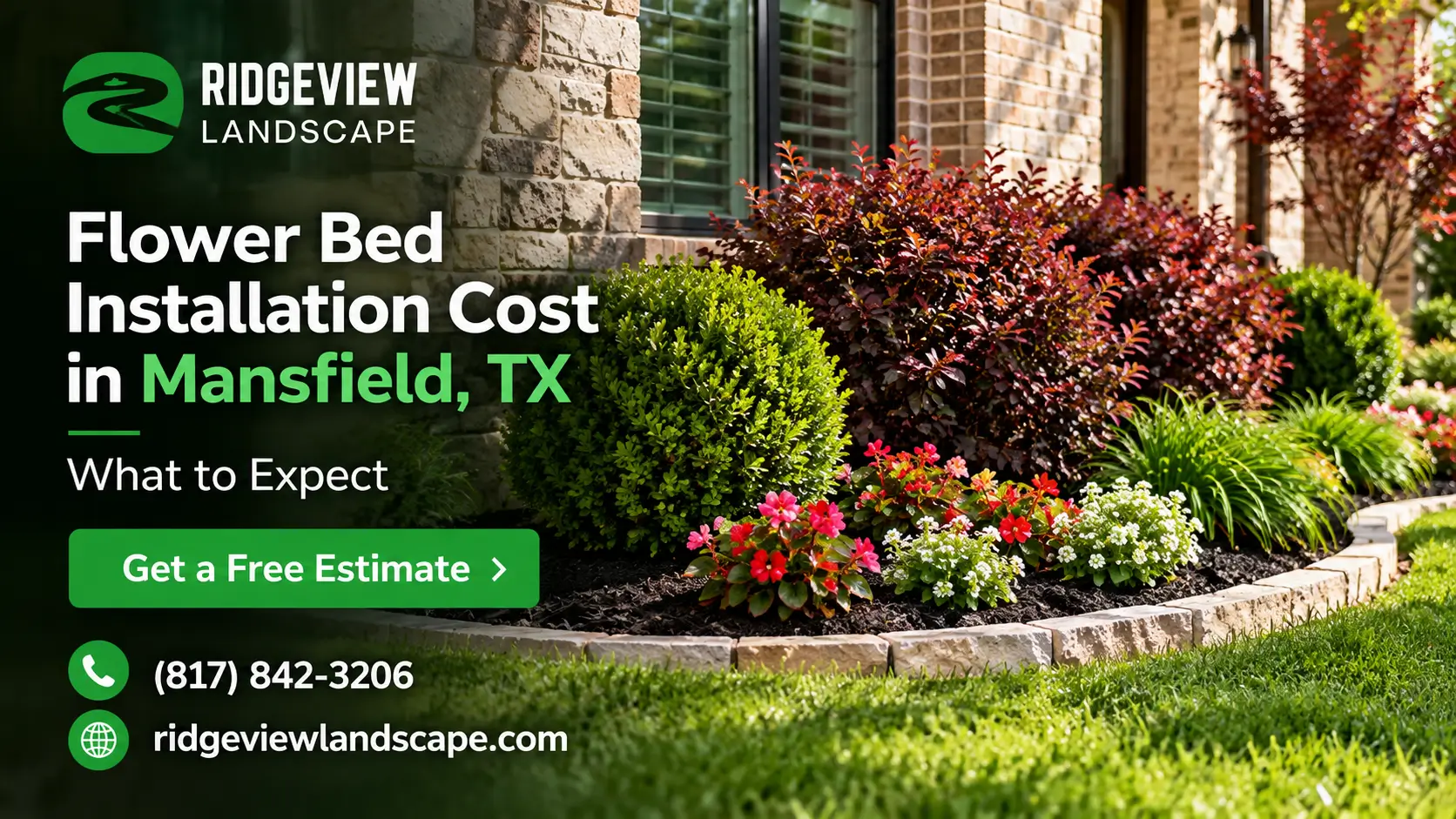
A well-designed flower bed can completely change the first impression of a home. It can frame the entry, soften large areas of brick or stone, add seasonal color, and make the entire front yard look more finished.
Before starting the project, most homeowners want to know the flower bed installation cost in Mansfield TX.
For 2026 planning, many professionally installed residential flower beds may start around $1,000 to $3,000 for a relatively straightforward project. Larger beds, premium plants, stone edging, irrigation changes, extensive soil preparation, drainage work, and custom landscape design can push the investment higher.
Ridgeview Landscape provides professional planting services for Mansfield homeowners who want flower beds designed around North Texas conditions and the appearance of their property.
There is no single price that applies to every property.
A small existing bed that needs fresh soil, plants, mulch, and edging will cost considerably less than creating a completely new front-yard landscape with mature shrubs, ornamental plants, stone borders, irrigation, and drainage improvements.
For early budgeting, homeowners can think about projects in three general categories:
A typical professionally installed flower bed may fall around $1,000 to $3,000, while larger or more detailed projects can move beyond that range.
These figures are planning estimates, not fixed Ridgeview Landscape prices. A property evaluation is necessary for an accurate quote.
The cost to install flower bed landscaping depends on much more than the flowers themselves.
Several elements determine how much labor and material will be required.
Larger beds naturally require more:
However, square footage alone does not determine the price.
A small bed filled with mature shrubs and premium stone edging could cost more than a larger bed using young plants and simple edging.
Creating a flower bed in an open, prepared area is different from working around old roots, compacted soil, existing grass, buried irrigation, or poorly draining clay.
Preparation may include:
The finished plants are only as successful as the conditions underneath them.
Reducing preparation to lower the initial cost may result in plants struggling later because of compaction, poor drainage, or unsuitable soil.
The flower bed design price varies according to the complexity of the project.
A simple planting plan may only require determining bed shape, plant quantities, color, and spacing. A complete front-yard redesign can involve much more detailed planning.
Professional design may consider:
Homeowners planning more than a simple planting refresh can explore Ridgeview Landscape's landscape design services.
A thoughtful plan can also help prevent unnecessary spending on plants that eventually become too large or perform poorly in the selected location.
Sometimes, but square-foot pricing should be treated carefully.
Flower bed projects do not have a universal price per square foot because material choices vary considerably.
For example, two 100-square-foot beds might use completely different combinations of shrubs, flowers, mulch, decorative stone, and edging.
A professional estimate may account for:
That is why comparing only square-foot numbers can be misleading.
The complete scope of work matters more than one pricing metric.
Edging creates separation between the lawn and planting area while helping the flower bed look finished.
Different flower bed edging designs can also change the price of the project.
A clean trench-style edge can create a simple transition between grass and mulch.
It offers a natural appearance and works well with curved beds.
Metal can create clean, narrow lines that suit modern landscapes.
It is especially useful where homeowners want defined geometry without a thick visible border.
Stone and masonry create a more permanent architectural look.
These materials work well around larger homes where a simple plastic border might appear undersized.
Homeowners interested in coordinating flower beds with stonework, patios, or other permanent features can review Ridgeview Landscape's masonry services.
Concrete borders can provide a durable, defined separation between turf and planting areas.
Custom shapes, curves, colors, and finishes may increase the installation price.
Knowing how to design a flower bed in front of house areas starts with the architecture rather than the nursery.
Plants should support the home instead of hiding important features.
Look at:
Traditional homes often work well with softer curves, while modern properties may benefit from cleaner and more geometric bed lines.
A strong front-yard flower bed usually has more than one height.
Use taller shrubs or structural plants without blocking windows.
Add flowering shrubs, perennials, or ornamental grasses.
Use compact flowers, groundcovers, or low-growing plants near the edge.
This creates visual depth and allows each plant group to remain visible.
Repeating the same plants in groups usually creates a cleaner, more intentional appearance.
Too many unrelated flowers can make even an expensive installation look busy.
Plant type and size can significantly affect flower bed installation cost in Mansfield TX.
Young plants in smaller containers generally cost less than mature specimens that provide immediate visual impact.
The overall design may include:
A good planting plan balances immediate appearance with how the landscape will develop over time.
Leaving enough room for mature growth also reduces overcrowding and unnecessary replacement.
They can.
North Texas landscapes can experience heavy rainfall, clay soil, and areas where water collects.
Installing expensive plants into a bed that stays saturated is rarely a good solution.
Warning signs include:
If the property already has water-management problems, Ridgeview Landscape can evaluate appropriate landscape drainage solutions before the flower bed is completed.
Solving the underlying problem may increase the initial project budget but can help protect the landscape investment.
New plants need consistent moisture while becoming established.
Existing sprinklers may not provide ideal coverage after a bed is enlarged or redesigned.
Some projects may require:
Planning irrigation before plants are installed can reduce the need to disturb completed landscaping later.
You do not need to choose the cheapest materials to keep a project efficient.
Instead, focus the budget where it has the greatest impact.
A properly sized bed usually looks better than an oversized planting area filled with too few plants.
Use shrubs and perennials for structure, then reserve smaller areas for seasonal flowers.
Not every plant needs to be mature on installation day.
Smaller plants can lower the initial budget if homeowners are comfortable allowing the landscape time to fill in.
Correct soil, grading, drainage, and irrigation issues before investing heavily in decorative plants.
A beautiful flower bed should complement the home while being practical for North Texas growing conditions.
Ridgeview Landscape considers bed shape, sunlight, soil, plant selection, mature size, drainage, irrigation, edging, and surrounding landscape features when planning outdoor improvements.
Homeowners can view examples of completed work in the Ridgeview Landscape project gallery and read local customer feedback through the Ridgeview Landscape Google Business Profile.
If you are planning new flower beds or want to redesign an existing landscape, contact Ridgeview Landscape to discuss your Mansfield property and request a project estimate.
For early 2026 planning, many straightforward professional flower bed projects may start around $1,000 to $3,000. Larger custom beds with premium plants, stone edging, irrigation, drainage, or extensive preparation can cost more.
A professional project may include bed layout, turf removal, soil preparation, plant material, planting labor, edging, mulch, cleanup, and irrigation adjustments. The exact scope varies by property.
Larger beds, mature plants, premium edging, poor soil, difficult access, drainage work, irrigation changes, decorative stone, and detailed landscape design can all increase the total.
The cost varies according to material and total linear footage. Natural edges are generally simpler, while metal, stone, masonry, and custom concrete edging require additional materials and installation labor.
That depends on the contractor and project scope. Simple planting layouts may be incorporated into installation planning, while more detailed landscape designs may be priced separately.
There is no universal depth. The bed should be proportional to the home and provide enough space for plants at their mature size. Larger homes often benefit from deeper planting beds rather than a narrow strip along the foundation.
Usually, smaller nursery plants cost less initially than mature specimens. They need more time to fill the landscape, but they can help control the project budget when properly spaced.
An on-site evaluation provides the most reliable estimate. Ridgeview Landscape can evaluate bed size, existing soil, plant selections, edging, irrigation, drainage, and preparation requirements before developing a quote.


